
Most homeowners spend a lot of time thinking about siding materials and window brands. Very few think about the caulking that holds it all together, and that is usually where projects quietly let themselves down. At Carp’s Complete Exteriors, we made the switch to Adfast caulking specifically because standard sealants were showing their limits on our finished projects. Here is what changed and why it matters to you.
The Small Detail That Finishes a Big Job
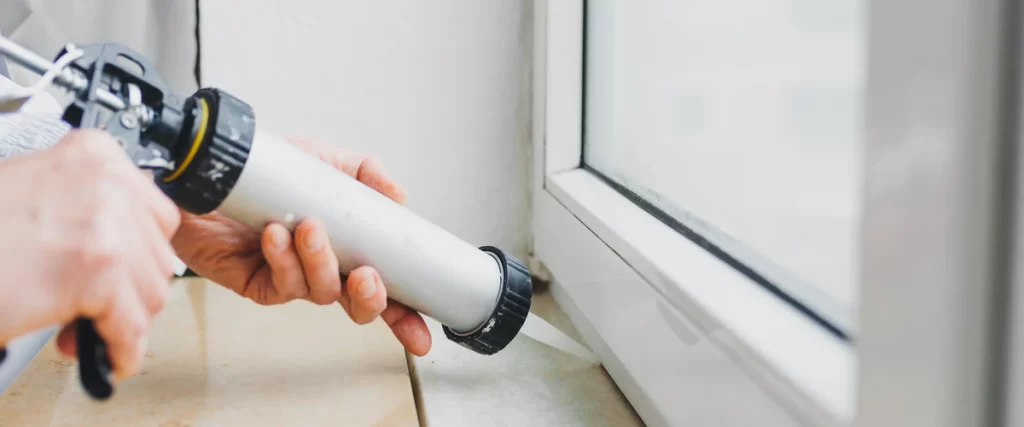
Caulking lives at every seam, every joint, every edge where your window frame meets the wall or your siding panels meet each other. Nobody photographs it. Nobody asks about it on a quote call. But the U.S. Department of Energy consistently identifies air leaks around windows and doors as one of the biggest sources of energy loss in a home. Caulking is the material standing between your house and that problem.
Most contractors use whatever sealant is available and cost-effective. The trouble shows up later when the color has faded to a vaguely yellowish gray, or the joint has started pulling away from the frame because the product could not handle the temperature swings Nebraska dishes out. A beautiful installation with a deteriorating caulk line looks worse than it should, and it performs worse than it should too.
What Makes Adfast Worth Using
Adfast’s Adseal 4580 is a professional-grade silicone sealant, and the gap between it and standard caulking products shows up quickly on a finished project. Here is how they compare:
| Feature | Standard Caulk | Adfast Adseal 4580 |
| UV Resistance | Fades and yellows over time | Holds color under prolonged UV exposure |
| Temperature Range | Limited performance | Rated from -40°F to over 400°F |
| Color Options | Limited range | 300+ options, matched to James Hardie colors |
| Life Expectancy | 5 to 10 years | Up to 30 years |
| Mold Resistance | Inconsistent | Hydrophobic surface resists mold and staining |
| Standards | Basic | Meets ASTM C920 and AAMA 802/805 |
The color matching alone changes what a completed job looks like. Adfast produces shades specifically calibrated to James Hardie siding, so the caulk line disappears into the surface rather than drawing the eye. When it is done right, you do not notice it. That is the point.
Nebraska Weather Is Not Gentle on Sealants
Summers pushing past 100°F, winters dropping well below zero, and plenty of freeze-thaw cycles in between. Standard sealants go brittle in the cold and soft in the heat. Frames expand and contract. Siding shifts slightly with temperature changes. A sealant that cannot move with those changes will crack, and cracked caulk means water infiltration, which means a much bigger problem down the line.
Adfast maintains full flexibility across that entire temperature range. The joint stays intact through the movement your house naturally goes through, season after season.
Why the Finish Line Matters
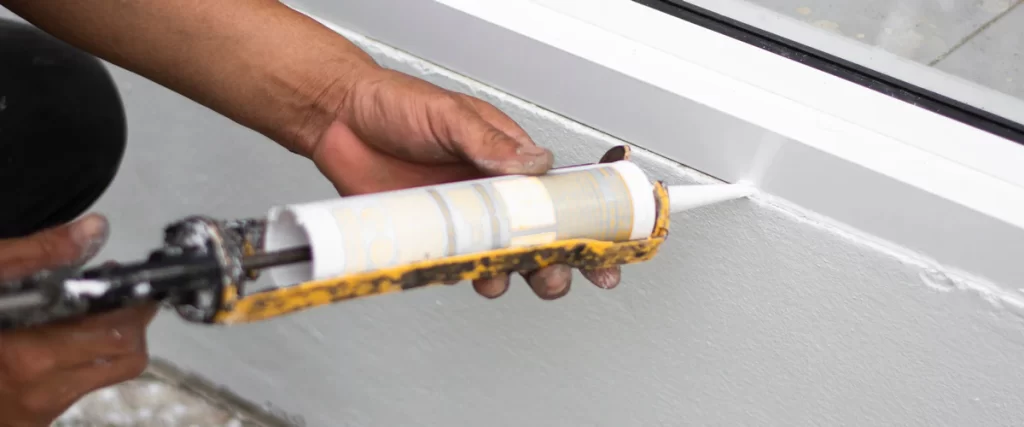
When a homeowner walks up to a completed siding or window installation, the eye almost always goes to the edges first. It is instinctive. The caulk line is one of the first impressions a finished project makes. Older pre-colored caulks fade, discolor, and pull away from frames in ways that make an otherwise solid installation look tired.
Adfast cures to a clean, consistent finish and holds it. Whites stay white. Darker tones stay true. There is no yellowing, no gradual graying, no visible separation from the frame three seasons later. We put our name on every project we complete, and a sloppy caulk line is still a sloppy caulk line regardless of how well everything else was done.
If you want a broader look at how energy-efficient siding and window choices work together, our piece on energy-efficient James Hardie siding is worth your time.
FAQs About Caulking for Windows and Siding
How often does caulking around windows need to be replaced?
With standard products, every five to ten years is a realistic expectation, sometimes sooner if the original application was poor or the product was not suited to the climate. With Adfast Adseal 4580, the life expectancy stretches considerably under normal conditions. The difference comes down to using the right material and applying it properly from the beginning.
Can new caulk go over old caulk?
In most cases, no. Old caulk that has cracked or lost its flexibility will not bond reliably with new material applied over it. The correct approach is full removal, proper surface cleaning, and a fresh application. It takes more time, but the seal holds significantly longer.
Does caulking actually affect energy efficiency?
More than people expect. Air sealing is one of the most cost-effective ways to reduce energy loss at home. A failed joint lets conditioned air out and outside air in. Good caulking is a meaningful part of how well a window or siding project actually performs over its life.
Is this something a homeowner can do themselves?
The product is available through supply houses, but the application matters as much as the material. Proper tooling and finishing of a caulk joint is a practiced skill. An unevenly finished joint will fail sooner and look worse than one done by someone who handles this regularly.
Ready to Have It Done Right?
Honestly, most homeowners would rather hand this off entirely than spend an afternoon researching silicone sealants, and that is a perfectly sensible approach. If you are planning a window or siding project and want the whole job finished to a standard that holds up, take a look at our window replacement services for more on what we offer. Or skip straight to the conversation and call us at (402) 651-1493, or message us here.