
Omaha winters crack things. Hail dents them. Summer heat fades them. If your siding has been through a few of those cycles and it’s starting to show, you’re probably here because you want a real number before picking up the phone. Fair enough.
The short answer: most Omaha homeowners spend between $8,000 and $20,000 on a full siding installation. Vinyl sits toward the lower end. Fiber cement lives in the middle to upper range. What actually moves your number around is covered below.
The Material You Pick Changes Everything
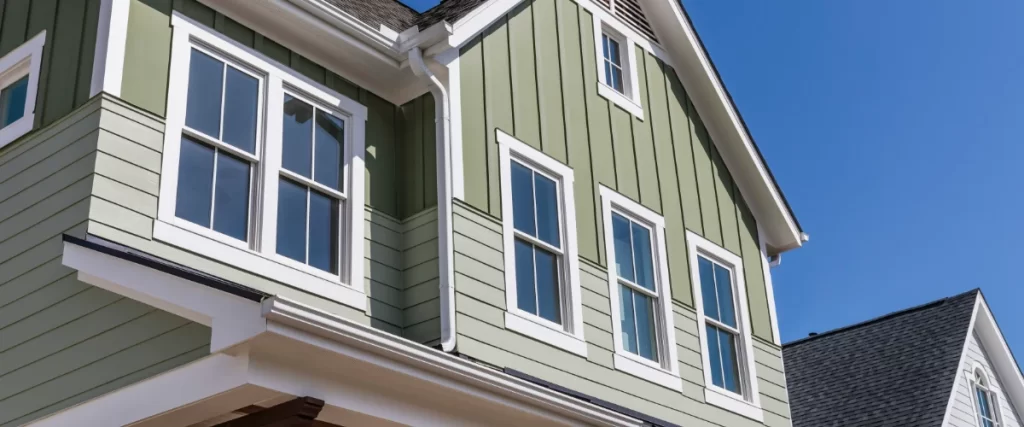
Siding cost starts with your material choice, and the gap between options is significant. Here’s an honest look at what installed costs look like in 2026 across the most common materials:
| Material | Installed Cost Per Sq Ft | Typical Total Range |
| Vinyl | $4 to $12 | $8,000 to $16,000 |
| Fiber Cement | $6 to $14 | $12,000 to $20,000 |
| Metal Siding | $7 to $15 | $14,000 to $22,000 |
| Engineered Wood | $7 to $12 | $13,000 to $20,000 |
Vinyl is the budget-friendly starting point. It installs fast, comes in a wide range of colors, and keeps day-one costs low. The trade-off is performance over time, particularly in a climate with temperature swings as dramatic as Omaha’s. Fiber cement handles freeze-thaw cycles better, resists hail impact, and holds paint far longer. If you want the full picture on why fiber cement performs the way it does here, the post on why we exclusively install James Hardie fiber cement siding gets into the specifics.
Metal siding installation runs highest in labor because the material requires more precision, but its impact resistance and longevity are genuinely impressive. Engineered wood splits the difference, giving you a natural look at a cost that doesn’t require a second mortgage.
What Pushes Your Quote Up (or Down)
Two houses on the same street can have quotes $6,000 apart. That’s not a mistake. It reflects actual project differences.
The things that add cost:
- Multi-story homes take longer to safely access, add scaffolding expense, and increase labor hours for every elevation
- Removing existing siding typically adds $0.70 to $2.00 per square foot, but it lets your contractor see what’s been hiding underneath
- Damaged substrate is the real wildcard, and water damage or rot found behind old siding gets fixed before new material goes on top, as it should
- Trim, fascia, and soffit often get replaced at the same time as siding, which adds to the total but prevents a patchy result
The things that bring cost down: a simple single-story footprint, sound sheathing underneath, and minimal penetrations like doors and windows to flash around.
Your home’s square footage is a starting point, not a final answer. The actual exterior wall surface is what drives material quantities, and a home’s interior square footage rarely matches its siding square footage.
The Permit Piece
Siding installation in Omaha requires a building permit. The City of Omaha Planning Department confirms that siding is a permitted project, with the application and fee required before work begins. A reputable contractor handles this as part of the process. If someone offers to skip it, that’s a reason to keep looking.
Permits also protect you at resale. Unpermitted work can complicate closings and title transfers in ways that are genuinely painful to untangle after the fact.
Energy Efficiency Is Worth Thinking About
New siding is also an opportunity to improve your home’s wall performance. Insulated siding options and proper housewrap installation reduce heat transfer across seasons, which shows up in utility costs over time. The U.S. Department of Energy’s guidance on home insulation outlines how wall assembly choices affect thermal performance year-round, and Omaha’s climate makes this worth factoring into your material decision.
If you’re debating between vinyl and fiber cement from a cost-only perspective, the gap narrows considerably once you account for maintenance cycles, repainting timelines, and energy performance over a 20-year window.
Thinking About Specific Products
If you’ve landed on lap siding as your profile of choice and want to compare options before committing, the breakdown on James Hardie Plank Lap Siding covers product specs, cost factors, and what drives the price at the material level. And if vinyl is still in the mix for you, the comparison between polymer siding and vinyl siding is a genuinely useful read before locking in a direction.
FAQ
Do I need to remove my existing siding before installing new? Often yes. Installing over old siding can hide moisture damage and create an uneven surface. Some situations allow for layering, but your contractor should assess the current condition first.
Is fall or winter cheaper for siding in Omaha? Contractors are typically less booked in late fall, which can mean better scheduling and occasionally better pricing. Summer is peak season and books up quickly.
How long does a siding installation take? Most full exterior replacements take between three and seven days depending on home size, material, and crew size.
What warranty should I expect? Fiber cement products like James Hardie carry a 30-year non-prorated warranty. Labor warranties vary by contractor, so ask directly before signing.
Skip the Spreadsheet
You’ve done the research. At this point, the most useful thing is an actual quote for your specific home rather than another range to sit with.
Take a look at our siding installation services to see how we approach the work. When you’re ready to talk numbers, call us at (402) 651-1493 or message us here.