James Hardie soffit siding is fiber cement built for the underside of your roof eaves and exterior porch ceilings.
It comes in vented and non-vented profiles, primed or factory-painted, smooth or CedarMill texture. It protects against moisture, pests, and rot, meets local code requirements, and pairs cleanly with the rest of your James Hardie trim and siding system. Installed cost typically runs between $3 and $8 per square foot, depending on profile, finish, and labor complexity.
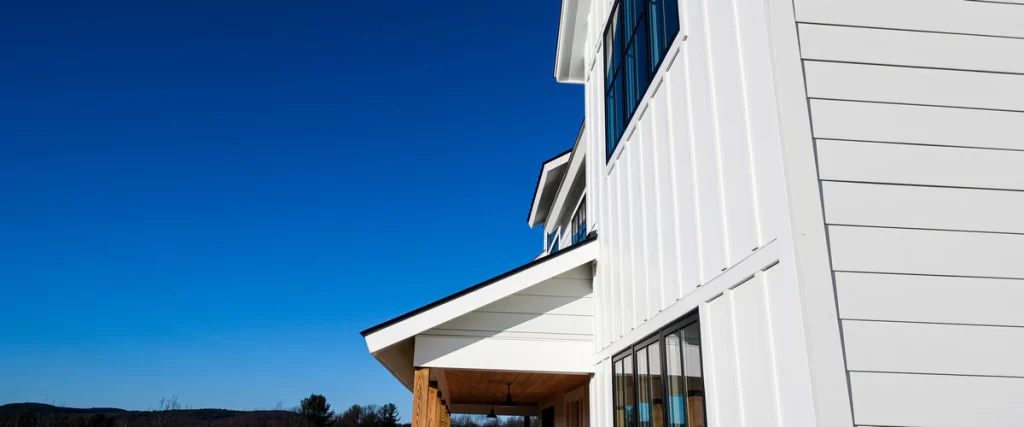
Most homeowners spend a lot of time thinking about lap siding colors and zero time thinking about what’s above their heads on the porch. Then a contractor points up there during an estimate and suddenly it becomes a conversation. Soffit isn’t glamorous, but it does real work, and if you’re already replacing siding, getting the soffit right is worth your attention.
Here’s what you need to know.
What Is James Hardie Soffit Siding?
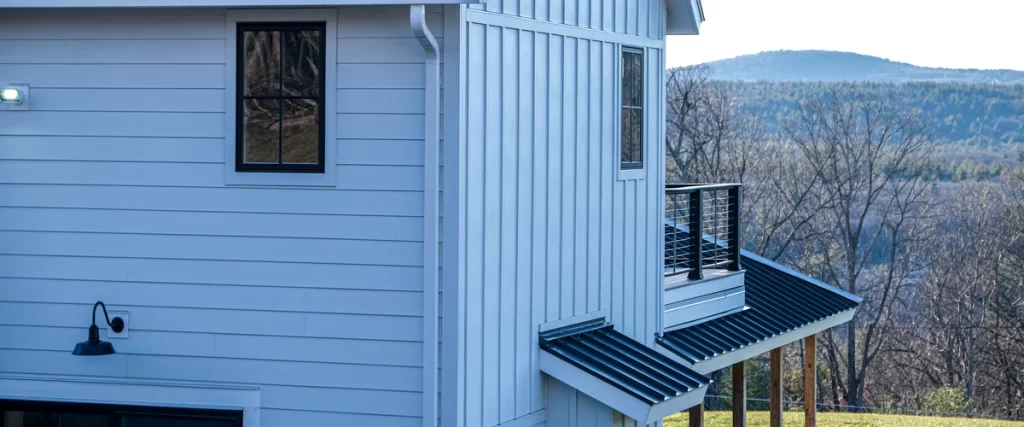
Soffit covers the underside of your roof’s overhang, the area between the exterior wall and the edge of the roof. It seals off what would otherwise be a vulnerable gap open to moisture, insects, birds, and debris. Most people don’t look at it, but everything behind it matters: insulation performance, attic ventilation, and the overall integrity of your exterior envelope.
James Hardie makes soffit out of fiber cement, the same core material as their siding line, a blend of Portland cement, sand, and cellulose fibers. That composition means it won’t rot, it gives insects nothing to work with, and it handles Nebraska’s freeze-thaw cycles without warping.
The Product Line: What James Hardie Actually Offers
The Hardie soffit catalog breaks down simply:
- HardieSoffit® Vented CedarMill — the most popular profile, with a wood-grain texture and built-in ventilation channels that allow passive airflow to meet code requirements in most jurisdictions
- HardieSoffit® Vented Smooth — same airflow function, cleaner modern face for homes that favor a crisp, contemporary look
- HardieSoffit® Non-Vented — for applications where ventilation is handled elsewhere (ridge vents, gable vents), or for exterior porch ceilings where ventilation isn’t part of the design requirement
Both vented profiles move air through the attic system, which helps regulate temperature and reduce moisture buildup. The U.S. Department of Housing and Urban Development’s guidance on residential ventilation establishes minimum standards that vented soffit products are specifically designed to satisfy.
All profiles come factory-primed, ready for paint, or available in select pre-finished colors through ColorPlus® Technology, including deep ocean and other tones in the Hardie palette.
Texture and Finish Options at a Glance
| Profile | Texture | Ventilation | Finish Options |
| HardieSoffit® Vented CedarMill | Wood grain | Yes | Primed or ColorPlus® |
| HardieSoffit® Vented Smooth | Smooth | Yes | Primed or ColorPlus® |
| HardieSoffit® Non-Vented | Smooth or CedarMill | No | Primed or ColorPlus® |
Primed boards cost less upfront and give you flexibility to paint any color on-site. Factory-finished boards via ColorPlus® cost slightly more but come with a 15-year finish warranty, better UV resistance, and no immediate painting labor.
What Does It Cost?
Soffit isn’t usually a standalone project. It gets replaced alongside siding, trim, or fascia as part of a broader exterior refresh. Ballpark numbers for budgeting purposes:
- Materials only: roughly $1.50 to $3.50 per square foot, depending on profile and finish
- Installed (materials plus labor): typically $3 to $8 per square foot
- Full porch ceiling replacement on a standard home: often falls in the $800 to $2,500 range depending on size and access
What pushes costs up? Multi-story homes, complex rooflines, and situations where the existing substrate has water damage requiring repair before the new soffit goes in. Getting an accurate number requires someone measuring your actual eave runs and porch ceiling area, not a formula.
Hardie Soffit vs. Vinyl Soffit: The Honest Comparison
Vinyl soffit is cheaper upfront and easier to cut. It’s also common, which means most crews have done it before. Here’s where the comparison becomes more interesting over time:
- Moisture resistance: Both handle direct water exposure reasonably well, but fiber cement holds up better in sustained humidity and at penetrations where caulk eventually fails
- Impact resistance: Fiber cement wins clearly, vinyl dents and cracks from hail or physical contact
- Pest resistance: Fiber cement gives insects and woodpeckers nothing to work with, vinyl doesn’t attract them but also doesn’t stop determined birds
- Paint adhesion: Hardie soffit, once primed, holds paint long-term, vinyl can’t be painted after factory color fades
- Matching the rest of the home: If you’re running James Hardie siding and trim, keeping soffit in the same fiber cement family gives you a consistent look and one material system to maintain
Vinyl makes sense as a budget choice. Fiber cement makes more sense when you want the exterior to hold together over 20 or 30 years without a patch-and-paint rotation.
Installation Notes Worth Knowing
A few things that matter beyond the material itself:
- Soffit needs to breathe where required. Installing non-vented product where your local code calls for ventilation is a problem.
- Clearances matter. James Hardie installation instructions specify minimum gaps from grade, roofing, and horizontal surfaces. Skipping these voids the warranty and accelerates moisture damage.
- Flashing at the soffit-to-fascia junction and back at the wall keeps water from tracking behind the panels.
- Primed boards need to be painted on all four edges, including cut ends, before or immediately after installation. Leaving raw fiber cement exposed invites moisture absorption.
FAQ
Can I paint James Hardie soffit any color I want? Yes, primed boards accept standard exterior paint. If you want factory color, select a ColorPlus® option at ordering time.
Does vented soffit really matter for attic performance? In most homes, yes. Adequate intake ventilation at the eaves works with exhaust ventilation at the ridge to prevent heat and moisture buildup that shortens roof life and raises energy costs.
How long does fiber cement soffit last? James Hardie backs their soffit products with a 30-year non-prorated warranty. Realistic lifespan with basic maintenance is well beyond that on a properly installed home.
Is soffit installation a DIY project? The cutting and fastening isn’t technically complex, but fiber cement requires carbide-tipped blades, generates silica dust that requires respiratory protection, and has specific fastening patterns in manufacturer instructions. Most homeowners pass on this one.
What color is deep ocean in the Hardie line? It’s a rich, saturated navy, popular for accent applications including soffit on contemporary homes or as a bold porch ceiling statement.
Honestly? Just Call Us
Reading all of this is useful if you like knowing what goes into your home. Most people, though, get to about this point and realize they’d rather just have someone they trust handle it. That’s a completely reasonable place to land.
If your soffit is showing water staining, sagging sections, paint failure, or you’re simply replacing the whole exterior and want it done once and done right, take a look at our siding installation services to see how we approach the full exterior picture. When you’re ready to talk specifics, call us at (402) 651-1493 or message us here.